

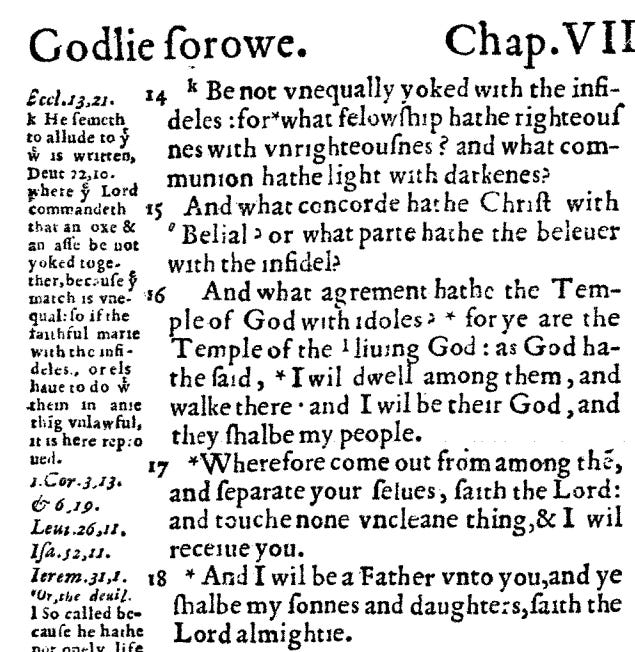
Be not unequally yoked with the infidels: for what fellowship hath righteousness with unrighteousness? and what communion hath light with darkness?
— Geneva Bible, 1560; 2 Corinthians 6:14
Note: Belial in verse 15 above. This sense is derived from 2 Corinthians 6:15, where Belial (or Beliar) as prince of darkness is contrasted with Christ, the light. It is clear in the Vulgate and Douay translations of 1 Kings 21:10 and 13, where the same Hebrew is rendered once as Belial and twice as “the devil”.
So my brother Mark and I were talking over breakfast this morning, and I was relating a story of our oxen; I will try to keep it short.
Oxen
When I first got the oxen, I timed pickup with an Oxen Basics course at Tillers International, in Scotts, Michigan. I picked them up, and had the driver drop me and the oxen at Tillers the night before the course started. Of course I knew nothing about these oxen, other than what I could see. I did not know how they had been worked, only that they had not been worked much recently. I knew their names, Elmer and Boris, and I could see that Elmer was taller and more stubborn than Boris. That was it.


As day one of the course started, those more experienced than I, which was everyone on staff at Tillers, advised that I make Boris the “nigh <near> ox,” the ox nearest the drover, i.e., me. So that’s what I did. The other ox is referred to as the “off ox,” as in the old saying, “I wouldn’t know him from Adam’s off ox.” The training was rough, which I chalked up entirely at the time to the fact that I was a new drover, and that Boris and Elmer had not been worked for a long time.
I brought the oxen home after a long weekend at Tillers, and honestly it was a tough row to hoe from the start; it never seemed easy, working the oxen in any capacity. The spring of 2025 was the first year I used them in the collection of maple sap, and nothing had changed, it was a struggle. I did learn though, over time, that while significantly bigger than Boris, Elmer was also the more dominant, and the more aggressive. On or about the second frustrating day of collecting sap, I decided I was going to try Elmer in the nigh ox position. And BANG, everything clicked! One change, putting the natural leader in the leadership position, was all it took to have a manageable and effective team. In this application of draft power, the oxen did as well as Belgian horses had done in prior years. It was a Win!
A yoke is a wooden bar that joins two oxen to each other and to the burden they pull. An “unequally yoked” team has one stronger ox and one weaker, or one taller and one shorter. The weaker or shorter ox would walk more slowly than the taller, stronger one, causing the load to go around in circles. When oxen are unequally yoked, they cannot perform the task set before them. Instead of working together, they are at odds with one another.
This is where the actual, real world, boots on the ground experience of driving oxen informs my understanding of scripture, experience that whoever wrote that passage above for gotquestions, was lacking. There is no such thing as a team of oxen, any two oxen, exactly alike in every regard.
Elmer is significantly taller than Boris, which is a reason why we made Boris the nigh ox originally; with Elmer in the nigh ox position it was hard to even see Boris, much less control him directly
Elmer is significantly bigger and stronger than Boris
And neither of those things, the physical attributes, had anything to do with how the team worked, or did not work; it came down to their “personalities,” or perhaps dispositions or temperaments is a better word. Elmer was naturally the dominant and less risk-averse ox, and that was that. Now, that is to say nothing less of Boris! Boris is a solid ox, in the off ox, follower position. His temperament is suitable to that position, and he is easier to approach and gentler than Elmer. Which ox am I fondest of? Boris, no doubt about it. Boris is a fine ox, no less than Elmer, if he follows! If he decides to take a detour because the grass looks nice fifteen feet off the path I and Elmer are walking, that’s a problem; if he decides to come to a dead stop on a downhill with a ton of sap in the wagon, that’s a problem! If he follows Elmer, no problem. Assuming Elmer follows me.
People
2 Corinthians 6:14 is of course, about people, and followers of Christ in particular; the verse is often brought up in the context of marriage. Back in the day, Jews were inter-marrying with all types, some of those types worshiped “other gods,” made idols, and so on, and so forth, for generations.
3 You shall have no other gods before Me.
4 You shall not make for yourself an idol, or any likeness of what is in heaven above or on the earth beneath or in the water under the earth. 5 You shall not worship them or serve them; for I, the LORD your God, am a jealous God, visiting the iniquity of the fathers on the children, on the third and the fourth generations of those who hate Me, 6 but showing lovingkindness to thousands, to those who love Me and keep My commandments.
Exodus 20
Let’s just say that a lot of “wrath of God” type stuff in the Old Testament resulted from the persistent assault on these commandments. And, the Jews were doing it anyway. They were being unfaithful. If you want to have your ass kicked by the Almighty, there is no better way than to worship other gods, or marry someone who worships other gods.
Thou shalt not plow with an ox and an ass together.
Deuteronomy 22:20 English Revised Version
Sheep
The “unequally yoked” analogy extends, in my opinion, to the behavior of sheep, and by extension, again, people. This penchant to divert from the path, like Boris seeing that greener grass off the path … the sheep for their own sake, and the sake of others, need to stay on the narrow way, where they are led by the shepherd to clear waters and green pastures.
I once owned a ewe whose conduct exactly typified this sort of person. She was one of the most attractive sheep that ever belonged to me. Her body was beautifully proportioned. She had a strong constitution and an excellent coat of wool. Her head was clean, alert, well-set with bright eyes. She bore sturdy lambs that matured rapidly.
But in spite of all these attractive attributes she had one pronounced fault. She was restless, discontent, and a fence crawler. … This one ewe produced more problems for me than almost all the rest of the flock combined. No matter what field or pasture the sheep were in, she would search all along the fences or shoreline (we lived by the sea) looking for a loophole she could crawl through and start to feed on the other side. It was not that she lacked pasturage. My fields were my joy and delight. No sheep in the district had better grazing. … She was simply never contented with things as they were. … she never learned her lesson …
Now it would have been bad enough if she was the only one who did this. It was a sufficient problem to find her and bring her back. But the further point was that she taught her lambs the same tricks. They simply followed her example and soon were as skilled at escaping as their mother. Even worse, however, was the example she set for the other sheep. In short time she began to lead others through the same holes and over the same dangerous paths down by the sea. … I finally came to the conclusion that to save the rest of the flock from becoming unsettled, she would have to go. I could not allow one obstinate, discontented ewe to ruin the whole ranch operation. It was a difficult decision to make, for I loved her in the same way I loved the rest. … But one morning I took the killing knife in hand and butchered her. … She was a sheep, who, in spite of all that I had done to give her the very best care, still wanted something else. She was not like the one who said, “The Lord is my shepherd—I shall not be in want.” It is a solemn warning to the carnal Christian, the backslider, the half-Christian, the one who wants the best of both worlds. Sometimes in short order they can be cut down.
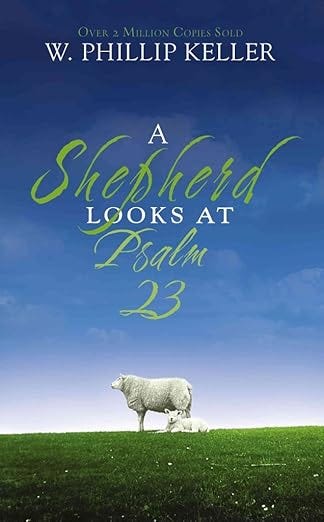
A Shepherd Looks At Psalm 23, pp 37-39
The point I’m trying to make is that it is not so much about an ox pushing slightly harder on the yoke, or the other pushing with less force, or one walking faster than the other to keep up, that happens; it is rather about the off ox not following the lead of the nigh ox, or the nigh ox not following the lead of the drover. It is about direction of travel; go (get up), left (haw), right (gee), backward (back), or stop (whoa). It is about not wandering off into the wilderness. It is about having no other gods above God, and no idols. It is about obedience.
And it is so likewise, with people.
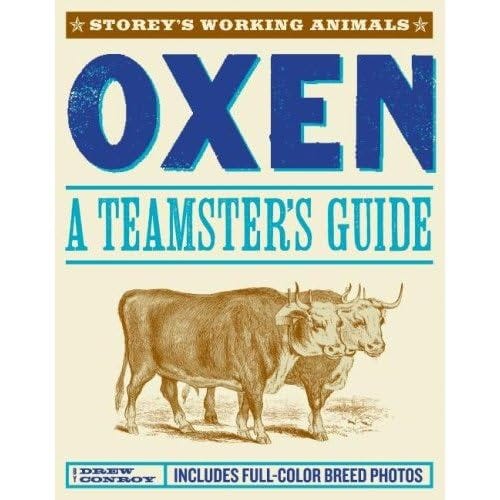
If you want to learn more about oxen, a good place to start is, Oxen: A Teamster’s Guide to Raising, Training, Driving & Showing, by Drew Conroy.
If you want learn more about shepherding sheep, of the four-legged variety, and how that relates to shepherding the two-legged kind spiritually, as in Psalm 23, you can do no better than, A Shepherd Looks At Psalm 23, by Phillip Keller. Or just stop by, I keep a few on-hand.
All the best, and may God bless you and keep you,
John